
The Ultimate Guide to Baby Milestones and Myths: Breaking Down the Most Common Baby Milestones
As first-time moms, I’m sure we’ve all been guilty of the rabbit holes we find ourselves going down just for the sake of trying to understand our babies more. And if we’re being honest, even mamas who aren’t new to this probably still have so many questions. We’re just all wanting to be sure our little ones are growing and developing in the ways they “should.” But when it comes to babies (just like our pregnancies and our deliveries) they are not one size fits all. So, while baby milestones can be amazing in tracking our kiddos growth progress, they can also add unnecessary stress if we are not getting our info from the right sources.
Personally, watching my baby girl grow and become more aware, physically stronger, and more socially attuned has been the highlight of my life up until now. And learning how babies advance in the first year is absolutely fascinating to me. So, I’ve taken the time to deep dive on the topic of baby milestones month by month along with the facts and the myths of them all. This is something that I find so interesting that I did the heavy lifting for you!
This blog is a shortened version of the baby milestones I investigated, but I put together an amazing free downloadable that breaks down 24 milestones I found to be the most common! It includes myths, truths, early signs, how to encourage your baby, when to speak to a provider, a little parent insight and simple activities you can do at home with your little one!
So just let this guide serve as a reminder that your baby’s growth is more like a rhythm than a race. Inside you’ll find myth-busting truths, gentle tips, and space to reflect on your baby’s journey at their own pace. Whether they roll, crawl, or clap “on time” or not at all, they’re doing just fine. And so are you.
What Are Baby Milestones, Really?
Baby milestones are developmental checkpoints that help track your little one’s growth in areas like movement, language, thinking, and emotional connection. But here’s the thing, they’re not rigid deadlines or pass/fail tests. Milestones are more like gentle guideposts, offering a sense of direction on your child’s unique path. Pediatricians don’t use them to judge; they use them to observe patterns over time, making sure development is unfolding in a steady, healthy rhythm. It’s not about hitting every mark “on time,” only about honoring the journey, one tiny triumph at a time. In this space, we look at milestones not as pressure points, but as opportunities to witness and celebrate the small wonders of growth.
The Myth of the “On-Time Baby”
Something that isn’t discussed much is this low-key stress we all feel when our babies are born. The societal pressure for our kiddos to be advanced in some way. It’s a competition we’re guilted into yet, like the movie Fight Club, none of us will talk about. Like, if your baby, for some reason, isn’t crawling by 6 months old somehow, they won’t get accepted into college. A crawling-to-college pipeline, if you will. Insert *eye roll* here. Because as dumb as it sounds when it’s worded like that, I can’t help but to think that’s why we freakout if our babes crawl later than we expect.
Here are some things for you to consider: Our babies are NOT robots… they’re humans, and they should be given the grace they deserve. Unfortunately, with social media, we now live in a time of comparison culture. We have this never-before-seen front row access to other moms’ lives without any knowledge of what’s real or not. And, let’s be honest, it can make us feel like if our kid isn’t hitting these “milestones” quickly then something must be wrong. Or even worse, we’ve done something to cause our baby to fall behind. But here’s the truth: a baby who walks at 18 months isn’t behind! They literally just did it in their own time. Remember, your baby is not a statistic or a study. They are a whole, developing person, and the point was never to be first. But instead to be fully supported and loved, and above all, seen as they unfold at their own pace.
Milestone Breakdown Cheat Sheet
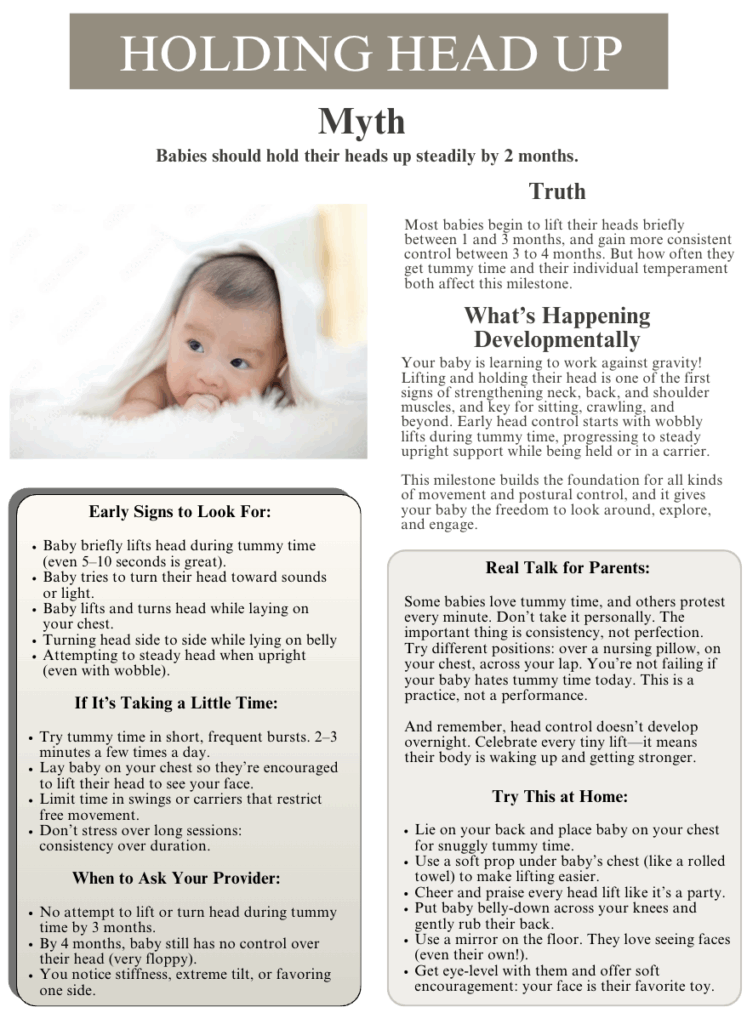
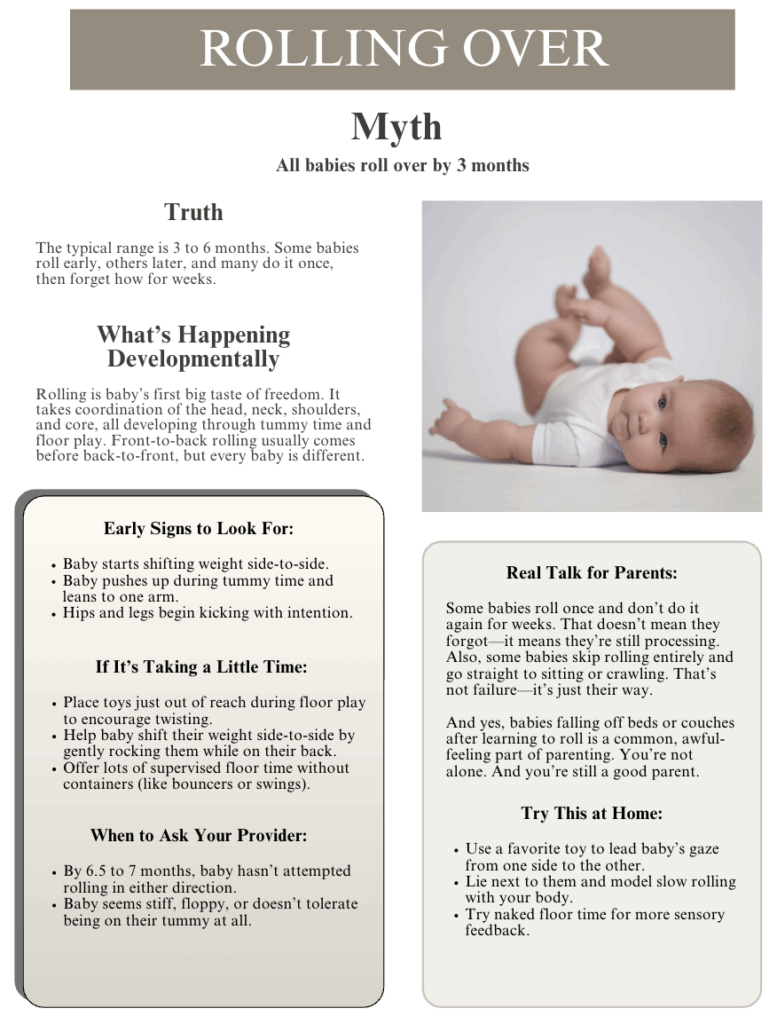
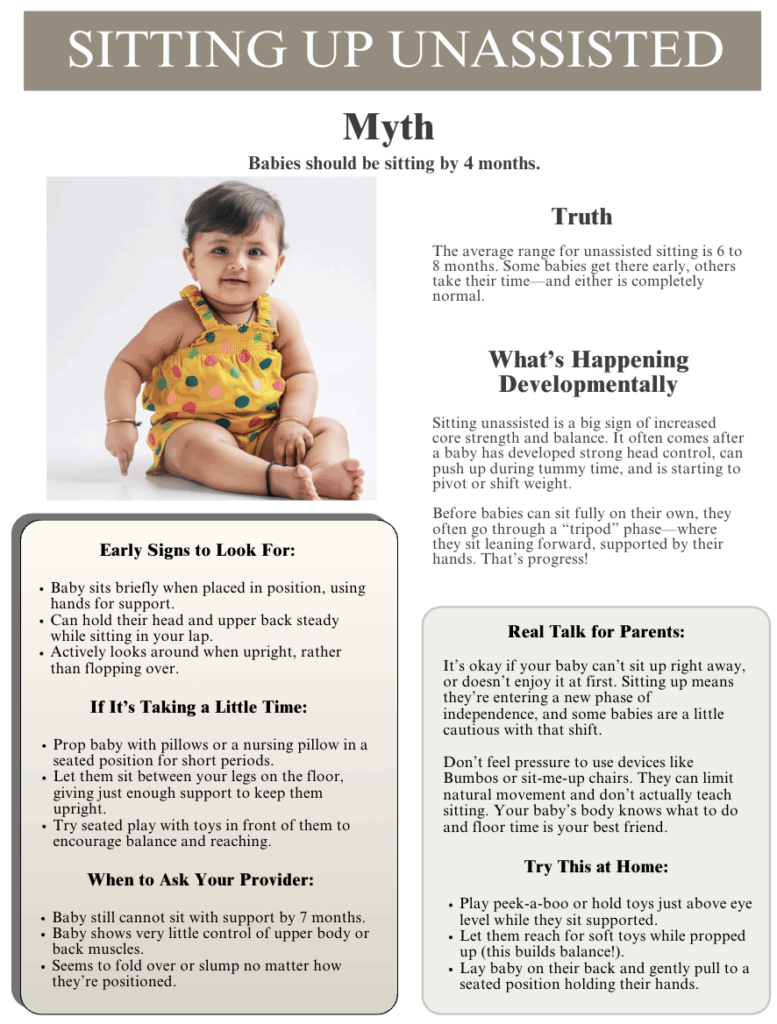
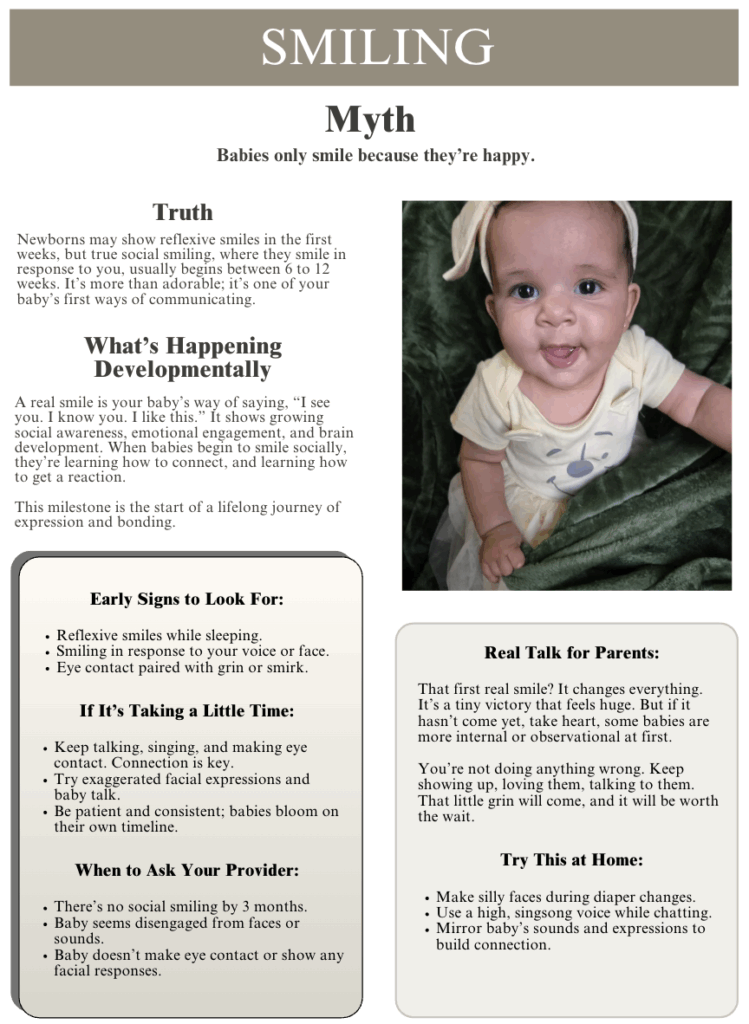
This isn’t your typical checklist. Here, we break down each major milestone honesty. As we discussed above, baby development isn’t some arbitrary race, and the milestones listed below are actually taken from the downloadable that I’m offering for free right now. I’ve included below the five most widely recognized and often talked about baby milestones from my eBook. Those milestones are:
- Holding Head Up
- Rolling Over
- Sitting Unassisted
- Smiling
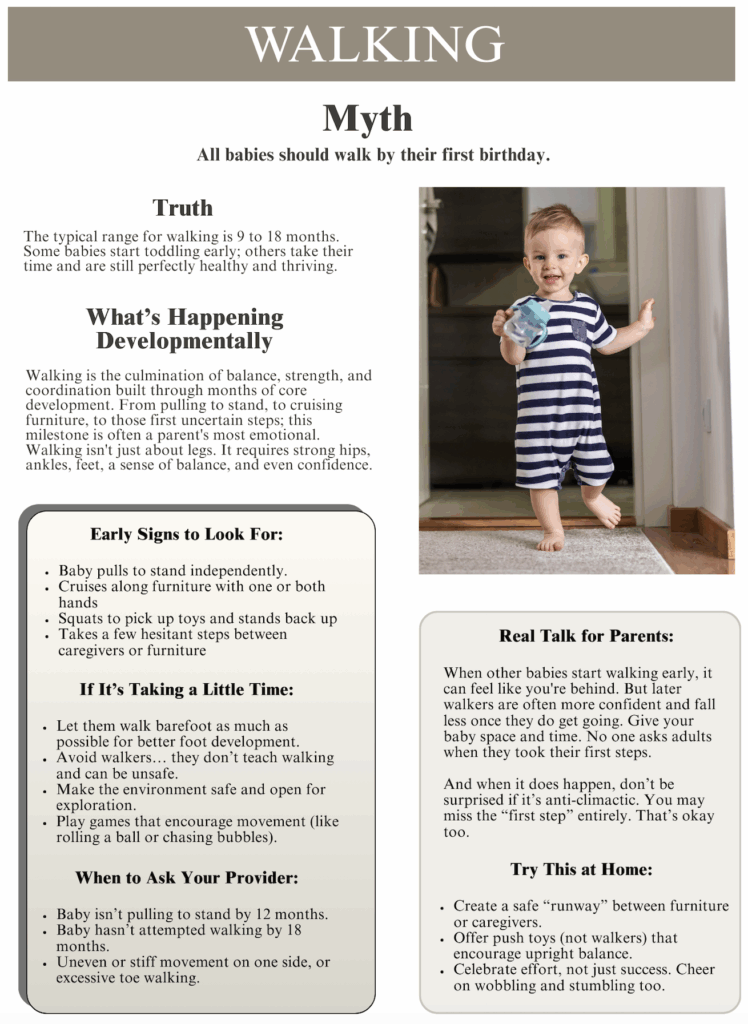
- Walking
The milestones not included in this blog but are also available in my eBook are:
- Sleeping Through the Night
- Laughing
- Responding to Name
- Babbling
- Crawling
- Pulling to Stand
- Cruising
- Palmer Grasp
- Pincer Grasp
- Self-Feeding
- Drinking From a Cup
- Stranger Anxiety
- Separation Anxiety
- Clapping
- Waving
- Pointing or Gesturing
- Following Simple Commands
- Fine Moter Skills
- First Words
When Should You Actually be Concerned?
If you’re noticing significant delays across multiple milestones, it’s not a bad idea to consult with your pediatrician to better understand what the causes could be. Sometimes things are red flags, and some are just quirky timing. At the end of the day the spectrum all these milestones fall on is wide and varied. Most times (hopefully, anyway) there’s not any real reason for concern, but babies are all so different. And since they have different personalities, temperaments, and interests, there’s no real way for me or most people to tell you when you should be concerned about your child’s development. As I would assume is the case in most situations, understanding your baby is a mix of what they can convey, your parental instinct, and the advice of your pediatrician and other professionals offer.
Encouraging Healthy Development
Now that we’ve established that any concerns regarding your baby’s growth is best to take to your pediatrician, let’s talk a little about how to encourage healthy development. I’ve included some ideas in the above text, and my free Baby Milestone Guide lists a few more recommendations for each milestone, but there are lots of activities you can do with your baby to help encourage their developmental growth. Things like tummy time, talking to your baby, and letting them explore can all be important, if not critical aspects to helping your baby grow. There’s no need for fancy toys or gadget, just some play ideas and daily routines to further help support growth.
Before You Go…
Your baby is on their own timeline and that’s not just okay, it’s beautiful! Milestones are helpful, but they’re not the whole story. So, take a breath, trust your instincts and when in doubt, check with your pediatrician.

If you’ve ever felt overwhelmed by one of these milestones, you’re not alone.
Let’s talk about it in the Reply Box below!
You’ve got this. For real.
Disclaimer: The content here is for informational and educational purposes only. It does not take the place of medical advice or treatment from a physician. Readers should consult their own doctor or a qualified healthcare professional for specific health concerns and questions