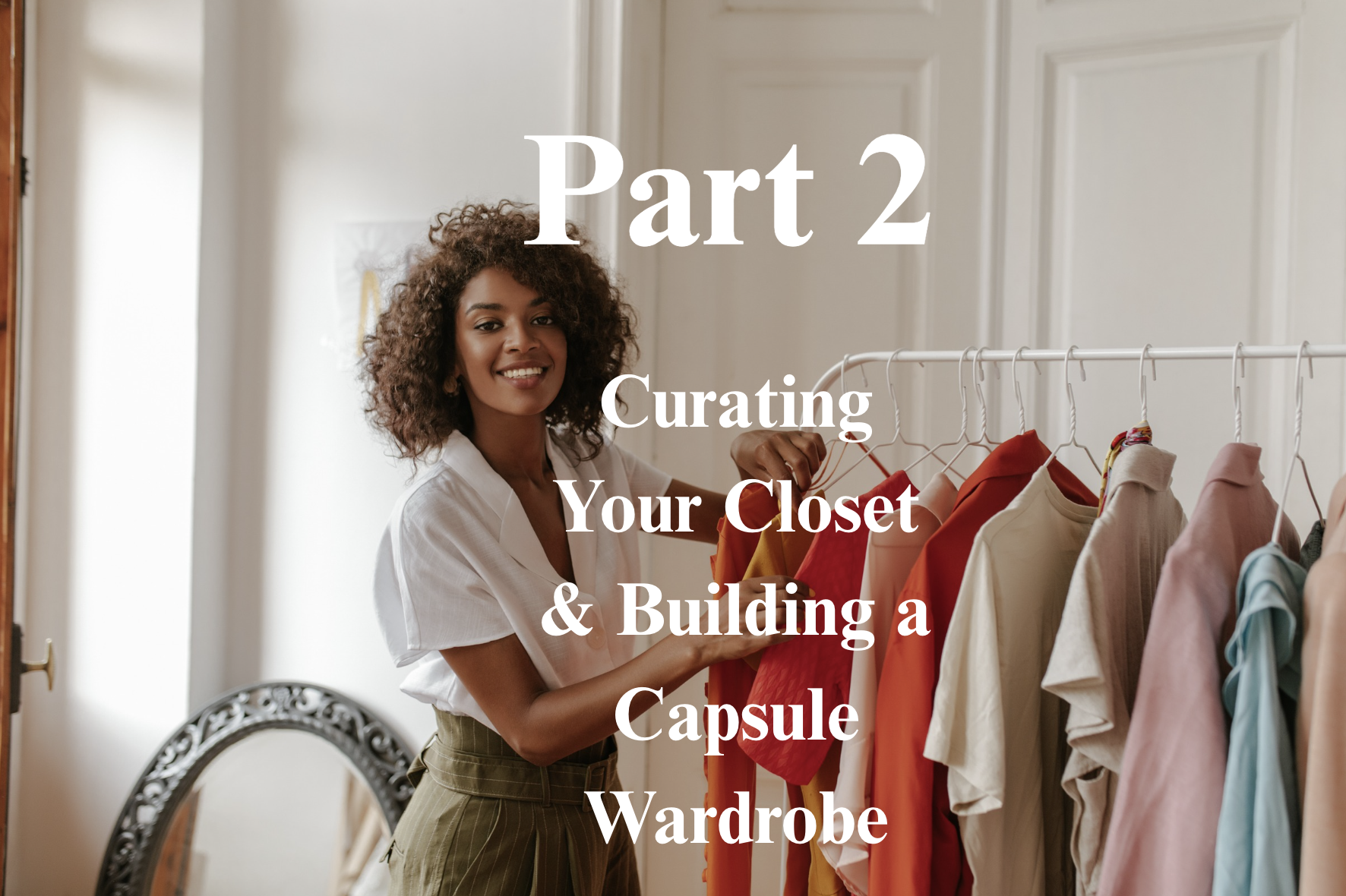
Part 2: Curating Your Closet & Building a Capsule Wardrobe
During the pandemic, I spent a lot of time intentionally building a capsule wardrobe for myself. I did the research, edited carefully, and rebuilt my closet from the ground up. At the time, I was incredibly proud of it. But fast forward to now, and when I stand in that same closet, I feel like I have nothing to wear. Not because there aren’t clothes or outfits—I know how much thought went into them—but because my life and body are different now. Motherhood changed me in ways I couldn’t fully predict. (If you know, you know.)
So if you’ve ever stood in front of a full closet feeling overwhelmed, disconnected, or uninspired, please know you’re not alone. And it’s not because you’ve lost your sense of style.
What’s really happening is that your closet is holding multiple versions of you at once. Some current, some outdated, some from entirely different times of your life. Building a capsule wardrobe is about clarity and not about minimalism for the sake of having less. It’s about creating a wardrobe that reflects who you are now, not who you used to be or who you thought you were supposed to be.
For many women in their 30s and 40s, closets become emotional archives. Career shifts, body changes, motherhood, healing, and evolving priorities all leave their imprint. A capsule wardrobe helps you gently edit that history so your clothes can support your present life instead of competing with it.
If Part 1 helped you understand who you’re dressing, this post is about creating a closet that actually works for her.
Step 1: Prepare for a Soft Closet Reset
Before we talk about sorting, purging, or organizing, let’s reset the energy around this process.
Ruthless closet clean-outs rarely work long-term. Usually guilt and frustration begin to creep in and the belief that this is about starting over will hijack the process. And while the goal of building a capsule wardrobe is to simplify and add ease to your life, this approach often does the opposite. It can lead to regret, panic shopping, and rebuying the same pieces in slightly different versions just to feel back in control again.
So, keeping that in mind, remember that building a capsule wardrobe works best when the process is gentle. It’s supposed to be fun, not a punishment! To set yourself up for success, I suggest the following:
- A donation bag or box
- A full-length mirror for try-ons
- A playlist that makes you feel grounded or energized
- Water, coffee, or something comforting nearby
Don’t approach this step with critique because nothing in your closet is “wrong.” It’s all information to help you move forward.
Step 2: The 4-Category Sort Method
When building a capsule wardrobe, the goal isn’t to get rid of everything. The ideal approach is to understand what truly supports you. As you go through your closet piece by piece, sort items into one of four categories:
- Yes, I love it – These are pieces you reach for, feel good in, and recognize yourself wearing now.
- No, thank you – Items that don’t fit, don’t feel aligned, or belong to a past version of you.
- Maybe / try on later – A neutral holding space. No pressure. Revisit these after your first pass.
- Seasonal / sentimental – Clothes that aren’t for right now but still deserve care — including maternity, postpartum, or memory-laden pieces.
This step is especially important for postpartum bodies or fluctuating sizes. Clothes that don’t fit your body today are not a failure. Your body is allowed to change and your closet is allowed to change with it.
Step 3: Identify Closet Blocks
As you begin building a capsule wardrobe, you may notice that the hardest part is deciding what to let go of. The difficulty behind closet purging is rarely about the clothes themselves but about what they represent.
Closet blocks are the emotional or mental attachments that keep us holding onto pieces that no longer fit our body, lifestyle, or identity. These blocks often disguise themselves as logic, but they’re rooted in attachment rather than alignment.
Common closet blocks sound like:
- “I might need this someday.”
- “This used to be me.”
- “I spent good money on this.”
- “I’ll fit into it again.”
- “Letting this go means admitting something changed.”
Many of us hold onto clothes from past or future versions of ourselves that don’t match our real life. When you release those blocks, you gain both physical space and clarity. Your closet shifts from pressure to support, which is essential when building a capsule wardrobe that works.
Step 4: Build Your Core Wardrobe
Now comes the foundation.
Building a capsule wardrobe means identifying a core group of pieces that mix easily, feel good on your body, and reflect your style direction from Part 1. This is not about someone else’s checklist but about your real life.
Your core wardrobe might include:
- Elevated basics that layer well
- Matching sets for effortless outfits
- One or two pairs of denim that truly fit
- Comfort-forward shoes that still feel intentional
- A few signature pieces that instantly feel like you
The goal is cohesion, not restriction. When your pieces work together, outfits become easier and confidence becomes automatic.
If you want a clearer starting point, I’ve put together capsule wardrobe examples at four different sizes — from 10 pieces to 30 — so you can choose what fits your life right now.
Step 5: Shop Intentionally (Not Emotionally)
Once you’ve edited your closet, shopping starts to feel very different, so before adding anything new, pause and ask:
- Do I love this?
- Does this support my actual life right now?
- Can I wear this at least three different ways?
- Does this align with my style words from Part 1?
- Is the quality up to my standards and will it last?
Intentional shopping is a cornerstone of building a capsule wardrobe. It prevents stress-based spending, fantasy-life purchases, and the cycle of buying clothes that don’t quite fit your reality.
Buy for your now-body, not an old size or a future version of yourself. Style confidence grows when your clothes meet you where you are. Here are important notes to keep in mind while shopping.
Step 6: Organize for Ease
Organization is the final layer, and it matters more than people realize.
Place your most-worn items at eye level. Organize in a way that feels intuitive to you, whether that’s by color, category, or frequency of wear.
Consider creating a small style station:
- Jewelry you wear regularly
- Your most-used shoes or bag
- A signature scent or accessory tray
Especially in postpartum or high-demand seasons, your closet should feel calming and not triggering. A well-organized space supports the ease you’re creating through building a capsule wardrobe.
Before You Go . . .
At its core, building a capsule wardrobe isn’t about having less. It’s about having what fits your body and your lifestyle. Think for a moment: “What does a peaceful, aligned closet feel like to me?” Let that answer guide how you edit, shop, and organize moving forward.
What’s Next in the Series:
Part 3: Styling & Accessorizing What You Already Own
Because once your closet is curated, learning how to style it is where everything comes alive.
And after that: Part 4 – A Postpartum Style Bonus, where we talk about dressing a changing body with compassion, confidence, and zero pressure.